
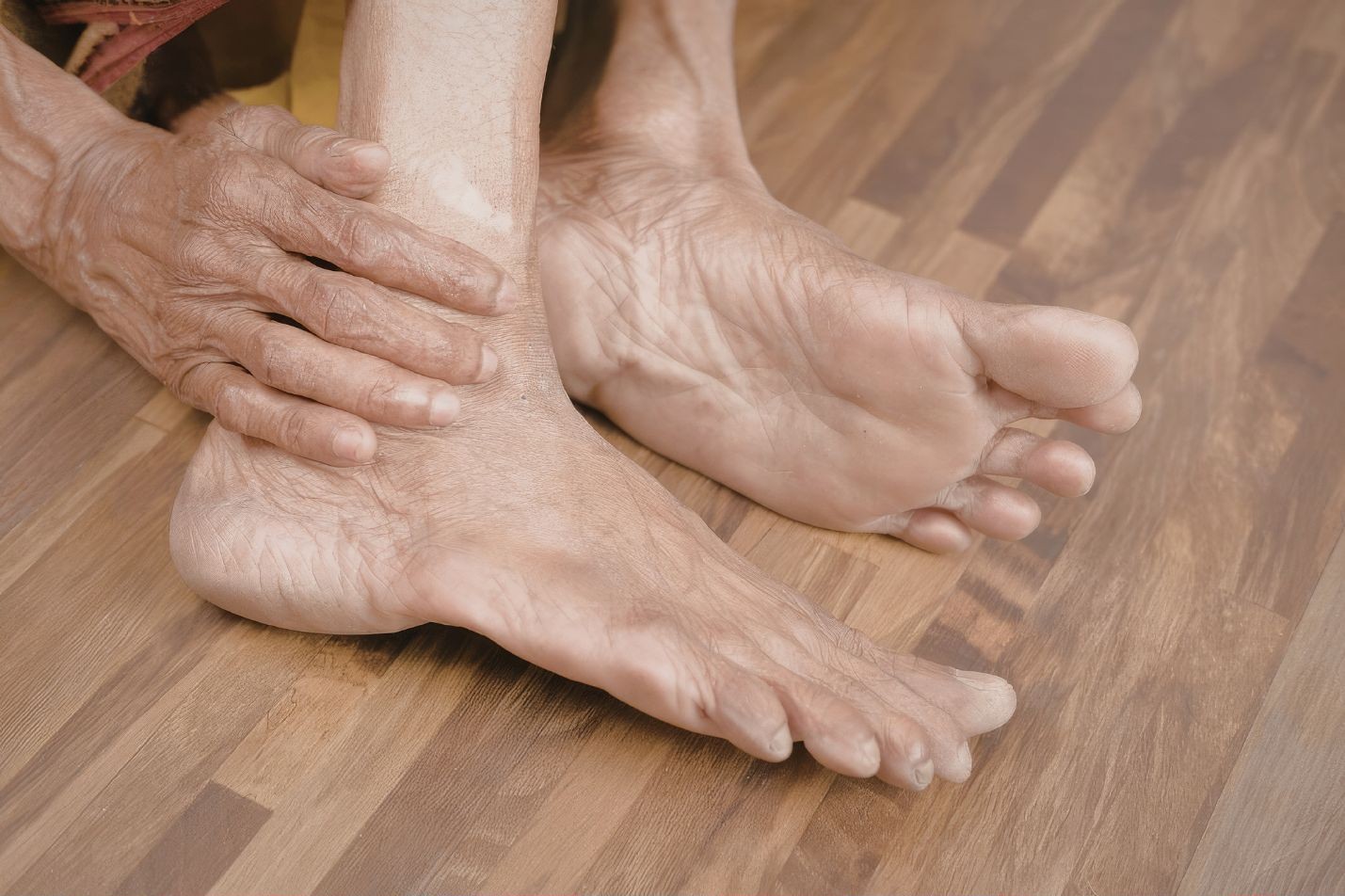
Your ankle does a lot without asking for attention. It absorbs force, keeps you balanced, and adjusts to every step. Then one day, on completely flat ground, it rolls like it has a mind of its own. No drama, no warning, just a sudden wobble that changes your week.
If that sounds familiar, it is worth getting it checked early. Call (03) 8360 8363 to book a tailored sprain recovery plan with Altona Meadows Osteopathy. The sooner you start, the smoother recovery tends to be. But, if it has been a while, do not worry. It is rarely too late to improve things.
Sprain basics – what actually happens
Most ankle sprains affect the ligaments on the outside of the joint. The main one is the anterior talofibular ligament, or ATFL. It helps stop the ankle from rolling inward.
A sprain usually happens when your foot points down and rolls in at the same time. This position makes the joint less stable. But, in some cases, the ankle may twist outward instead, affecting different ligaments. The common thread is that the joint moves beyond what the ligaments can control and ligament fibres stretch, and sometimes tear.
Here is something many people do not realise. Ligaments heal more slowly than muscles. They rely on the right kind of movement to guide repair. Without that, healing can happen, but not always in a strong or organised way.
Why it can roll on flat ground, and why it KEEPS happening
Most ankle rolls have a clear cause. A pothole, loose gravel, or a misstep you can blame on something external. Perhaps even a banana peel, if your day has taken a very cartoon-like turn.
But not all sprains come with a clear explanation.
For a first-time sprain, factors like fatigue, reduced concentration, or limited ankle mobility can increase risk. If the joint cannot move well, it may reach its limit sooner, even during a simple step on flat ground.
After an initial sprain, the risk can increase further.
The ankle may lose some of its position sense. Tiny receptors in the ligament, called mechanoreceptors, help your brain track where your joint is. When they are disrupted, your reaction time slows.
At the same time, the muscles that stabilise the ankle, particularly the peroneals, may not activate as quickly. This is a normal response after injury.
Together, these changes make the ankle more likely to slip into a vulnerable position before your body corrects it. That is why repeat sprains often happen during everyday movements, even on flat surfaces.
Early care and safe loading
Rest helps in the first few days, but too much can slow recovery. Gentle movement keeps the joint from stiffening.
Start with small, comfortable movements and build from there. As pain settles, gradual loading becomes important. This helps guide healing and rebuild strength.
If walking causes a limp, that is a sign to ease back slightly. The goal is steady progress, not pushing through pain.
Osteopathic care can help restore joint movement and reduce unnecessary tension, which supports this early phase.
Rehab phases that build resilience
A good recovery follows a simple progression.
- Mobility comes first. Restoring movement helps the joint work efficiently again.
- Strength builds support around the ankle. The calf and outer ankle muscles play a key role here.
- Proprioception retrains balance and coordination. This is often the missing piece after a sprain.
- Sport-specific work prepares you for real-life demands, whether that is running, training, or keeping up with the kids.
Each step matters. Skipping ahead often leads to setbacks.
Whole-body contributors you cannot ignore
Your ankle does not work alone. The way your hips, knees, and feet move can all affect it.
For example, if your hip control drops, your knee may drift inward. That can increase stress on the ankle. A stiff foot can also change how you push off when walking or running.
Osteopathy looks at the bigger picture. Addressing these factors can improve how your ankle handles load.
Prevention and footwear advice
Once you are feeling better, prevention becomes the focus.
Simple balance exercises can keep your ankle responsive. Strength work helps maintain stability.
Footwear should suit your activity. Worn-out shoes can reduce support. Sudden changes in shoe style should be gradual.
A small amount of regular work can make a big difference over time.
A smarter way to recover
A sprain recovery plan combines hands-on care with a clear home program. This helps rebuild movement, strength, and confidence step by step.
Starting early gives you the best chance of a smooth recovery. That said, older sprains can still respond well to the right approach.
If your ankle feels unreliable, or you want to reduce the risk of it happening again, we can help. Call (03) 8360 8363 to book your sprain recovery plan with Altona Meadows Osteopathy. A more stable, confident ankle is still within reach.
Follow us on social media for more tips – we will help you stay on your feet and not let things roll in the wrong direction. We’re on Facebook and Instagram.
Information provided here (including text, graphics, images, outbound links, and other material) is for informational purposes only. It is general in nature and is not to be used or considered as a substitute for personalised professional medical advice, diagnosis, or treatment. Always seek the advice of your qualified allied health provider regarding any symptoms, medical conditions, or treatments and before undertaking any new health care regimen.
References
When needed, we research our content using a range of sources across both web and books. Regular references we use include:
- Foundations of Osteopathic Medicine, 4th ed. Seffinger et al. 2019
- Thieme Atlas of Anatomy, 4th ed. Gilroy et al. 2021.
- Clinical Sports Medicine: Injuries, 5th ed. Brukner & Khan. 2017.
- Principles of Anatomy & Physiology, 13th ed. Tortora & Derrickson. 2011.
- Differential Diagnosis and Management for the Chiropractor. 5th ed. Souza. 2016.
- Physiopedia website – https://www.physio-pedia.com/home/
- Pubmed website for latest articles – https://pubmed.ncbi.nlm.nih.gov/
- Google Scholar for latest articles – https://scholar.google.com/
- World Health Organisation website – https://www.who.int/
- Osteopathy Australia website – https://osteopathy.org.au/
- Australian Physiotherapy Association website – https://australian.physio/
- Chiropractic Australia website – https://www.chiropracticaustralia.org.au/
- Professional bodies websites and health conditions charity websites, like Arthritis Australia – https://arthritisaustralia.com.au/